
Liberalization and telecom reforms are known to be necessary to hasten growth in tele-density.

The Association of Unified Telecom Service Providers of India, the CDMA operators' body, said mobile services could become dearer by 28 paisa per minute if the recommendations by the Telecom Regulatory Authority of India are accepted in their current form.

The Supreme Court has directed the CBI to conduct a pan-India investigation into digital arrest scams and questioned the RBI about its lack of AI usage in detecting and freezing accounts used by cybercriminals.

Newer telecom operators and dual technology entities are opposing the department of telecommunications (DoT)'s decision to ask the Telecom Regulatory Authority of India (Trai) to give its view on whether the price of spectrum being offered in the coming 2G auction should be valid for 10 years instead of 20 years.

A bench comprising justices K S Radhakrishnan and Vikramajit Sen said CAG can carry out the audit to examine whether the companies are giving proper share of their revenue to the government.

The government on Wednesday notified its decision to permit 100 per cent foreign direct investment (FDI) under automatic route in the telecom services sector. In a press note, the Department for Promotion of Industry and Internal Trade (DPIIT) said foreign investment in telecom services will be subject to the condition of Press Note 3 of 2020. Accordingly, cases requiring prior government approval under the provisions of Press Note 3 will continue to be in place.

Tech and startup industry bodies have again pushed back against calls by telecom operators to bring over-the-top (OTT) services under a licensing regime similar to telcos, and open them up to taxation. Ahead of public consultations on the issue later this week, the Internet & Mobile Association of India (IAMAI), Nasscom and the US India Strategic Partnership Forum (USISPF), among others, have written to the government arguing against such efforts.

DoT plans to initiate move that might lower the revenues telcos share with government.
The CDMA-based mobile subscriber base of private operators touched 80.68 lakh (8.06 million), adding 343,000 customers in June this year.

Delhi High Court says it can do so under the TRAI Act, rejects petitions filed by telecom associations.

Numbers could be classified further into (140) marketing and (160 or 161) for service calls to easily identify the purpose of the call in the future.

Telecom service providers have doubled down on their demands for a proposed fair-share charge (FSC) to be levied on major over-the-top (OTT) service providers, opening up the 6 GHz spectrum band and increasing the number of testing labs for telecommunication products. Telecom industry body Cellular Operators Association of India (COAI) on Wednesday said these were the topmost demands for Prime Minister Narendra Modi-led National Democratic Alliance (NDA) government. The industry body wants this additional capital expenditure to be borne by these Large Traffic Generator (LTGs) OTTs as a proposed fair-share charge.

The petitioner had sought enforcement of existing laws on call drops.

Concerned over the series of attacks on mobile phone towers in the valley, the Centre also issued an advisory to the state government.

Adani Data Networks said it plans to create a private 5G network for its operations. However, it acquired the spectrum in the last 5G auction alongside three telecom companies. Subsequently, it was granted a unified licence for access services, which enables it to provide telecom services in the country.

Last week, the Supreme Court refused to grant interim relief to the operators.

As per the initial version of the Unified Licence on August 2, DoT had exempted Internet services revenue from adjusted gross revenue -- part of telecom company's earnings on which annual licence fee is levied.

Department of Telecom had sought the legal opinion of the matter from the government's counsel.

Trai said the reports that compensation was not feasible were based on wrong inputs.

Industry associations and companies in the United States, including the US Chamber of Commerce, Coalition of Services Industries and the iconic bike company Harley Davidson have called on the Donald Trump dispensation to push India to reduce tariffs, non-tariffs, and regulatory barriers to boost American exports.

Companies might have to shell out a fourth of the industry's annual net revenue to clear the obligation
Cellular Operators Association of India (COAI) and Association of Unified Telcom Service Providers of India (AUSPI) have opposed the proposal to compensate consumers.

After a two year run-in with controversies, telecom sector now looks stable and seems back on its feet with initial investment proposal of over Rs 11,000 crore (Rs 110 billion) received in 2013.
The apex body of CDMA operators, has shot off a letter to the telecom ministry alleging that the GSM operators were given spectrum "way beyond their licences".

At Rs 2,685 crore for 1MHz pan-Indian spectrum, reserve price would be 52% higher than that of 1,800MHz band
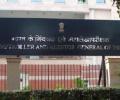
Instead of only government departments and state-owned undertakings, the CAG can now audit private companies, too.

Trai calls both Jio and incumbents for a meeting to discuss the issue

To bring clarity, the department clearly defines terms such as promoter and competitor.

Lt Governor says discoms must cooperate or face cancellation of licences. Ficci cries interference.

The uniform SUC, if implemented as per recommendations made by Telecom Regulatory Authority of India, will provide relief for mobile operators such as Airtel, Vodafone and Idea, but will increase rates for broadband wireless access spectrum holders like RJIL.

Once launched, RJio services will cover over 18,000 towns and over 200,000 villages across all the 22 service areas of the country
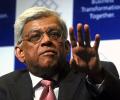
Parekh ensures that he never forgets the importance of correctness.
.jpg)
Banking as we know it will stand on its head in the next 10 years.
